Movement & Momentum in Gunstoppable
Why speed is damage—grapple chains, wall-runs, grinds, and routes that keep Fenix lethal.
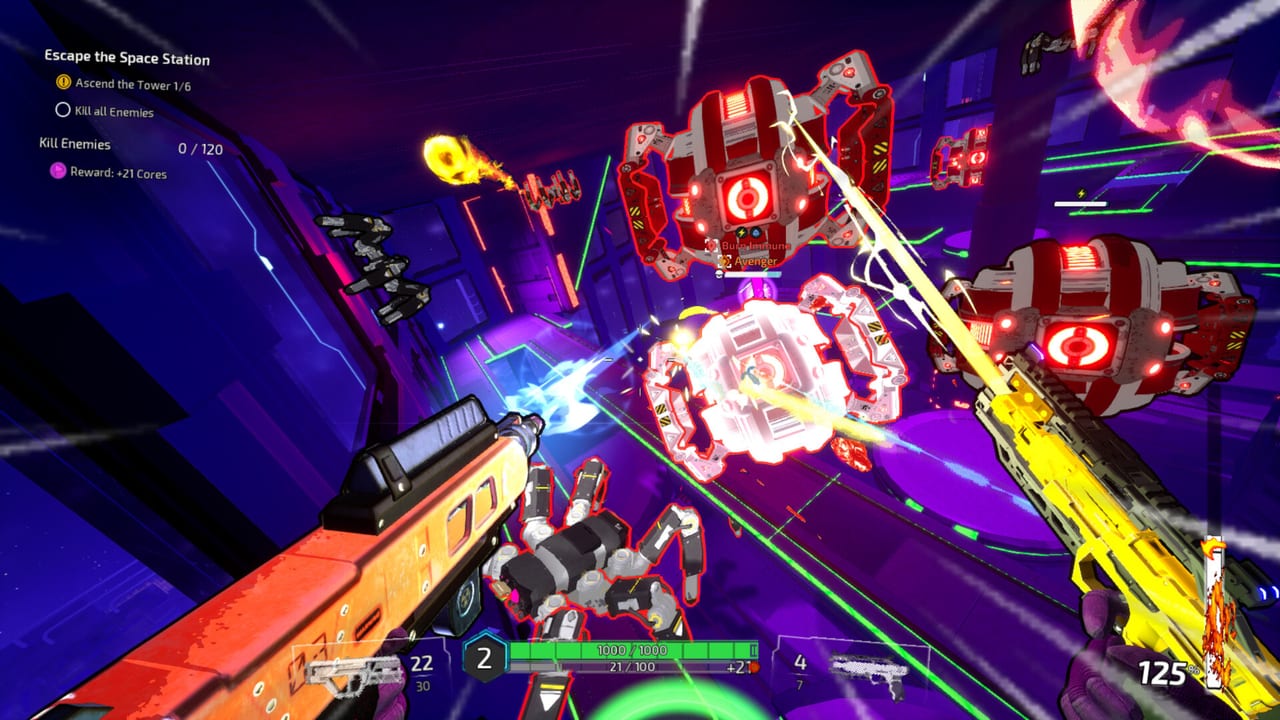
In Gunstoppable, movement is not flavor—it is your primary damage stat. CAGE Studios built a momentum roguelite FPS where speed multiplies weapon output, meaning a stationary Fenix loses to a sliding, grappling Fenix even with worse gear. This guide breaks down every locomotion tool, how to chain them without bleeding momentum, and where biomes help or hurt your multiplier.
Pair this read with Controls for exact bindings and How to Play for where movement fits in the run loop. New players should finish Getting Started first.
The Speed-Damage Rule
Gunstoppable displays or implies a momentum multiplier during combat. The faster you move—especially horizontally and vertically—the harder your dual-wield setup hits. Patch 26 expanded scaling: speed now multiplies damage, attack speed, and reload speed—not just raw hit numbers. High speedometer tiers mean faster trigger cadence and shorter empty-mag windows, which indirectly boosts kill chains and Views & Scoring pace.
Multipliers decay when you:
- Stand still while firing
- Take heavy stagger without parrying
- Wade through slow zones like flooded Underwater Prison halls
- Miss grapple connections and faceplant
Recovery is always possible: slide out of bad states, wall-run to rebuild air speed, rail-grind into the next pack. Treat momentum like a resource bar you never want empty entering elite rooms.
Patch 29 — Speed still pays, idle cadence changed (Aug 2026)
Patch 29 removed the extra attack and reload slowdown when not moving. Standing still is no longer double-taxed on cadence, but Patch 26 speed multipliers still raise damage, attack speed, and reload while the meter is high. The same patch lengthened base slides so you hold 125% speed longer — overshoot is a new failure mode on old cancel timings. Day-2 hotfix grapples are faster; re-learn transfers on Settings after remaps.
Patch 26 (final demo, Jul 29, 2026) expanded the speed rule beyond raw hit power. At high speedometer tiers, momentum now multiplies:
- Damage per shot and melee swing
- Attack speed — faster trigger cadence on both hands
- Reload speed — shorter empty-mag downtime while moving
Practical impact: a fast Fenix not only hits harder but fires and reloads faster, compounding DPS during Reaper windows. Patch 26 also made speedometer depletion easier to read when chains break—watch the HUD whenever cadence feels sluggish despite good aim. Score chasers chasing Over Achiever (100k views in one run) should pair this section with Views & Scoring.
Core Movement Toolkit
Grapple
The grapple hook closes gaps and preserves velocity better than sprinting alone. Best practices:
- Aim for elevated anchors in Cyberpunk City to drop into fights with downward momentum.
- Cancel grapple into slide at landing to avoid the brief idle window.
- Use grapple to skip slow water sections when anchors exist near ceiling pipes.
Slide
Slides maintain ground speed and fit under obstacles. Chain slide → jump → wall-run for infinite-feeling ground loops. Reload during slides—see Weapons for animation notes per gun type.
Wall-Run
Wall-runs carry horizontal speed along vertical surfaces. Elite rooms often circle arenas with runnable walls; orbit enemies instead of backpedaling. Wall-run exits into grapple can snap you across the room for Reaper Mode chain starts.
Wall speed storage (post–Next Fest)
Steam Next Fest feedback drove tuning so speed partially stores after wall collisions instead of hard-zeroing momentum. Shallow-angle wall impacts preserve chains that earliest demos punished—critical for Cyberpunk City corner routes and Leaderboards lines. Patch 26 attack/reload scaling stacks on top: stored speed keeps both damage and reload tempo elevated entering the next pack.
Rail-Grind
Grind rails appear heavily in urban biomes. Mounting a rail grants free speed without stamina cost—use them as rotation tools, not sightseeing. Drop off rails toward enemy clusters to open with multiplied damage.
Building Chains
A reliable beginner chain:
Grind or grapple in → slide past first target → wall-run arc → fire during apex → grapple out
Advanced players weave parries (Parry Guide) between chains to avoid stagger loss. Boss fights like Johnny Jetpack demand aerial routes; the giant robot crab punishes floor camping—wall-run legs and weak-point platforms stay accessible only if you enter with speed.
Biome Interaction
| Zone | Momentum note |
|---|---|
| Cyberpunk City | Rails and tall walls reward vertical routes |
| Underwater Prison | Water drag drops multiplier—minimize wading |
| Mixed arenas | Breakables sometimes hide grapple points |
See Map & Biomes for full comparisons. Choose paths at doors based on your augments—mobility hex perks shine in city zones; underwater routes need extra sustain from Items or Kane shops.
Augments and Attachments
Mobility augments on the hex grid extend slide distance, reduce grapple cooldown, or add speed on kill. Weapon attachments that boost damage only matter if you can stay fast—check the Tier List for mobility-first picks early in a run.
Absurd synergies (shotgun into flamethrower, bananas into nukes) often need high entry speed to proc consistently. Shop with Kane the Rat accordingly before pushing a boss gate listed on Bosses.
Reaper Mode Synergy
Kill chains while moving fast fill Reaper faster in practice because you clear packs without stopping. When Reaper prompts, press Q or B—not automatic—and use slow time to reposition onto rails or walls for the next chain. Full breakdown: Reaper Mode.
Common Mistakes
- Reload standing still — always reload on slide or wall-run if possible.
- Ignoring rails — free speed is wasted DPS.
- Choosing underwater paths without mobility buys — slow routes need prep at Kane.
- Parry greed without exit plan — failed parries zero your multiplier; read Parry Guide.
- Dual-wielding heavy weapons without movement augments — see Tools for mobility-adjusted DPS sims.
Practice Routine
- Empty room drill: chain grapple-slide-wall-run ten times without stopping.
- Run Cyberpunk City routes until rails feel automatic.
- Clear one Underwater Prison path while tracking time spent in water.
- Fight an elite with Reaper ready—activate manually and exit on a wall-run.
- Review Updates after patches; movement values occasionally tune.
Gunstoppable released on Steam August 5, 2026, and Xbox Series August 31, 2026—both platforms benefit from stable frame rates for parry and wall-run timing. Single-player only: single-player only partner to revive you if momentum collapses mid-room.
Master movement and every weapon in Gunstoppable feels tier-one. Stop moving and even S-tier Items look like trash. Keep Fenix flying.
Frequently Asked Questions
Quick answers to the most common Gunstoppable questions.
Does standing still reduce damage in Gunstoppable?
Yes. Speed multiplies damage, attack speed, and reload speed since Patch 26. Idle or slow movement significantly lowers DPS and reload tempo even with strong weapons.
What is the best movement chain for beginners?
Grapple or grind into a room, slide past the first enemy, wall-run the arc, fire at the apex, then grapple out. Repeat without letting speed hit zero.
Do underwater areas hurt momentum?
Underwater Prison sections apply drag that drops your multiplier. Minimize wading, use grapple anchors, and buy mobility augments from Kane before deep paths.
Can rail-grinds replace sprinting?
Rails grant free speed and are often faster than ground sprinting into fights. Use them whenever Cyberpunk City or urban arenas expose grind lines.
How does movement interact with Reaper Mode?
Fast clears build kill chains that enable Reaper. After you press Q or B, use slow time to reposition onto walls or rails for the next speed chain.
Does speed affect reload speed in Gunstoppable?
Yes since Patch 26. Speed multiplies damage, attack speed, and reload speed—not just per-shot power. Keep moving through reload windows on slide or wall-run.